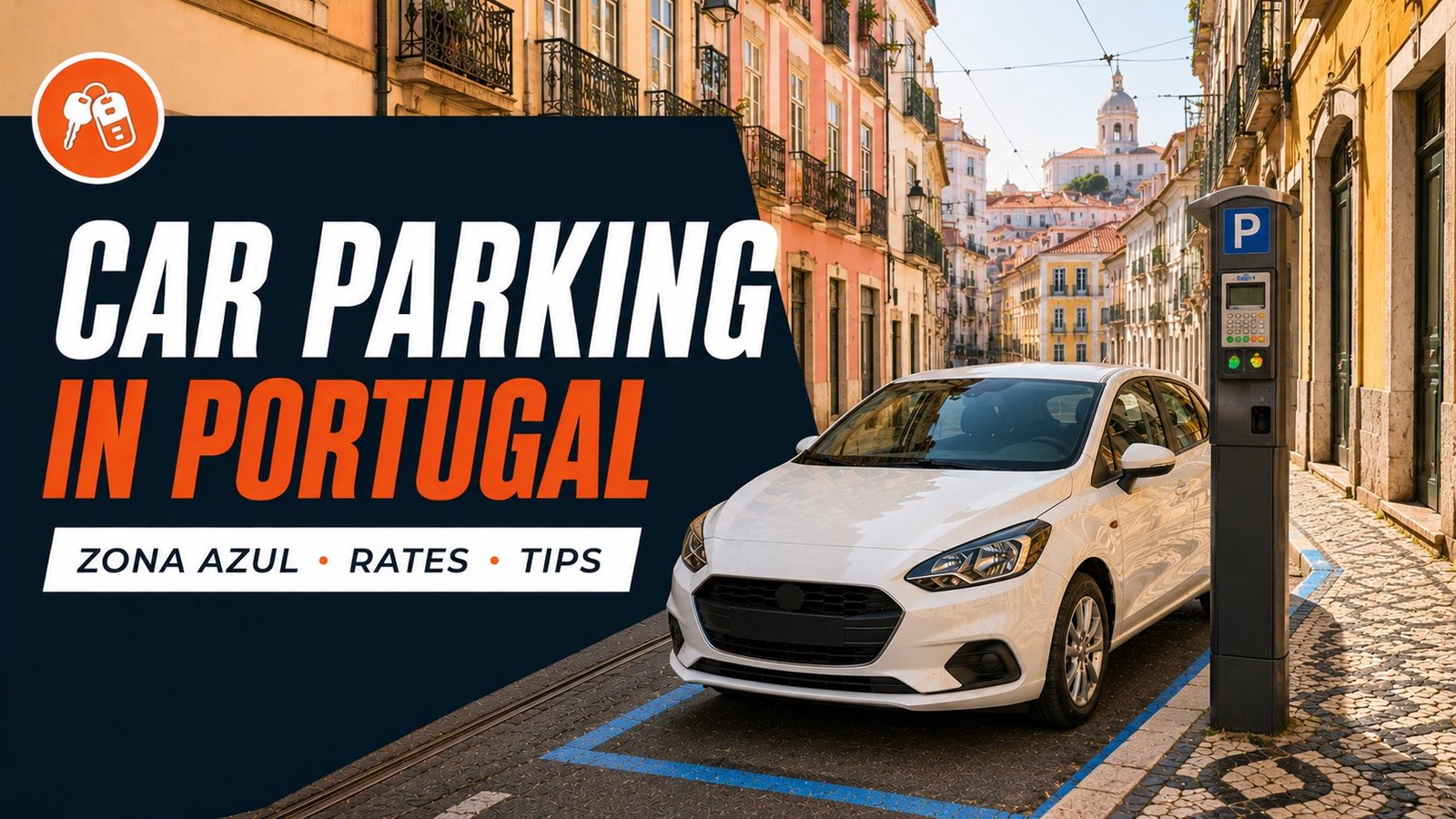

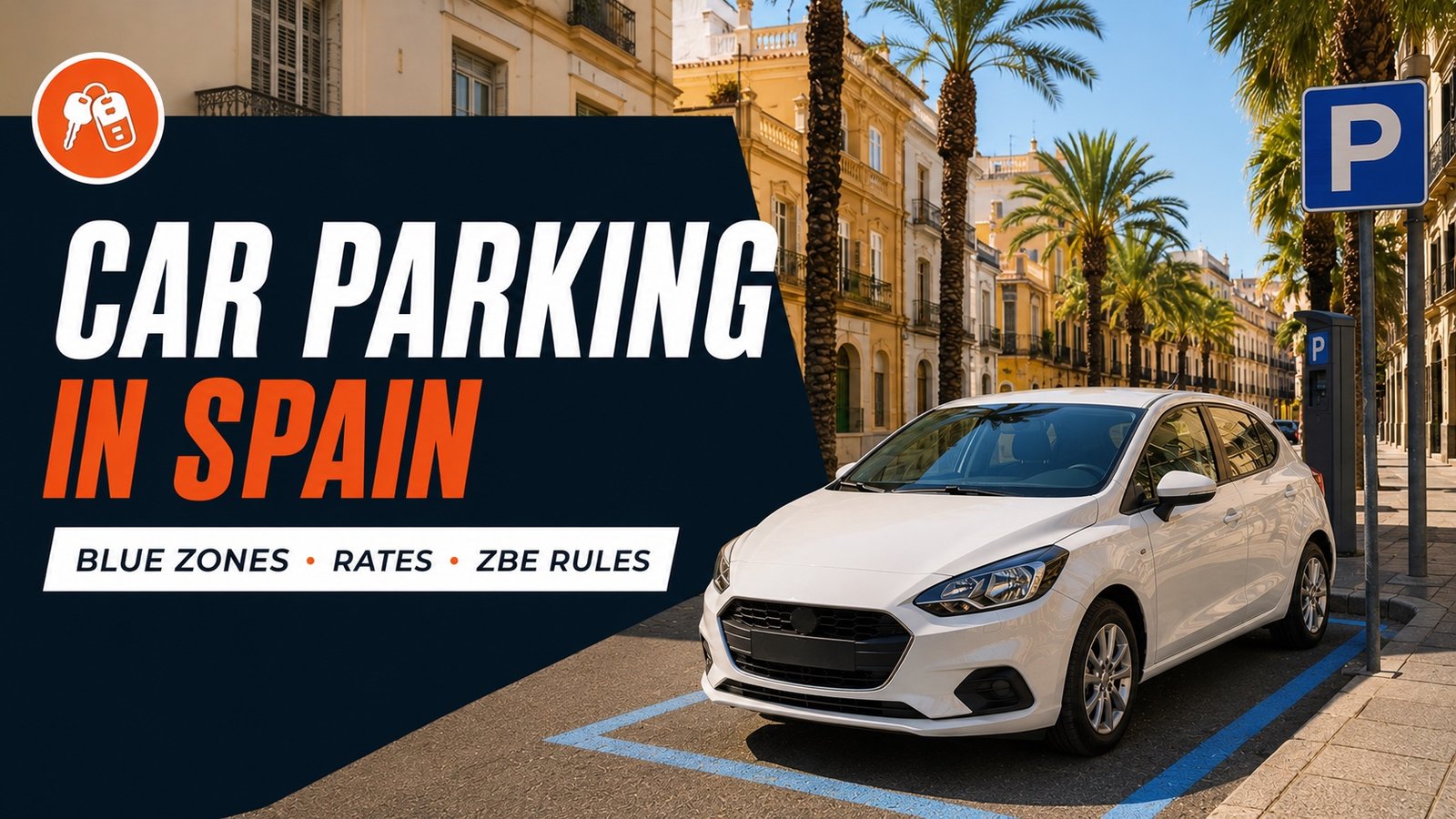
Spanish street parking runs on colour: blue zones for visitors, green zones for residents first, and ever-growing low-emission areas (ZBE) in the big cities. Madrid and Barcelona now restrict older vehicles from entire districts – rental cars are usually compliant, but the signs matter. This hub explains the system and links our guides for 79 Spanish cities.
Zona azul (blue) is paid visitor parking – typically €0.50–2.50/hour with 2–4 hour limits. Zona verde (green) prioritises residents; visitors either pay more or can't park at all – read the sign.
Large cities enforce ZBE low-emission zones (Zonas de Bajas Emisiones). Rental fleets are modern and normally compliant, but access rules for non-resident plates vary by city – our city guides flag the details.
Machines accept coins and cards; apps like ElParking and Telpark work across most municipalities. August is quiet in business districts and brutal on the coast.
Blue (zona azul) is general paid parking for anyone. Green (zona verde) is resident-priority – visitors pay significantly more per hour or are excluded entirely, depending on the city.
Zona de Bajas Emisiones – a low-emission zone required in all Spanish cities over 50,000 inhabitants. Rental cars generally carry the required environmental label, but entry rules for out-of-town vehicles differ by city.
Blue zones typically €0.50–2.50/hour; underground garages €1.50–3.50/hour in big cities, with day rates of €15–30.
In many business districts the blue zone goes unenforced or free in August – but never assume it on the coast, where enforcement peaks in summer.
Disclosure: Auto Jardim participates in affiliate programs including DiscoverCars and Parclick. Zone rules and rates are municipal and change – always check the sign where you park.
Last updated: July 2026.