
Before you travel to Portugal in 2026, know four numbers: non-EU visitors are registered by the EU Entry/Exit System (fully live since 10 April 2026), ETIAS is not yet required, Lisbon charges a €4 tourist tax per person per night, and a 30-day rail pass costs just €20. Below are the entry rules, transport costs, driving rules and four quieter places worth the detour, all checked on 30 October 2026.
| Topic | What applies in 2026 | Number |
|---|---|---|
| EU Entry/Exit System (EES) | Non-EU visitors register fingerprints and a photo at the border; replaces passport stamps | Fully live since 10 April 2026 |
| ETIAS travel authorisation | Not in operation yet; no start date announced | €20 fee once it launches |
| Visa-free stay (UK, US, Canada and others) | Days in all Schengen countries count together | 90 days in any 180 |
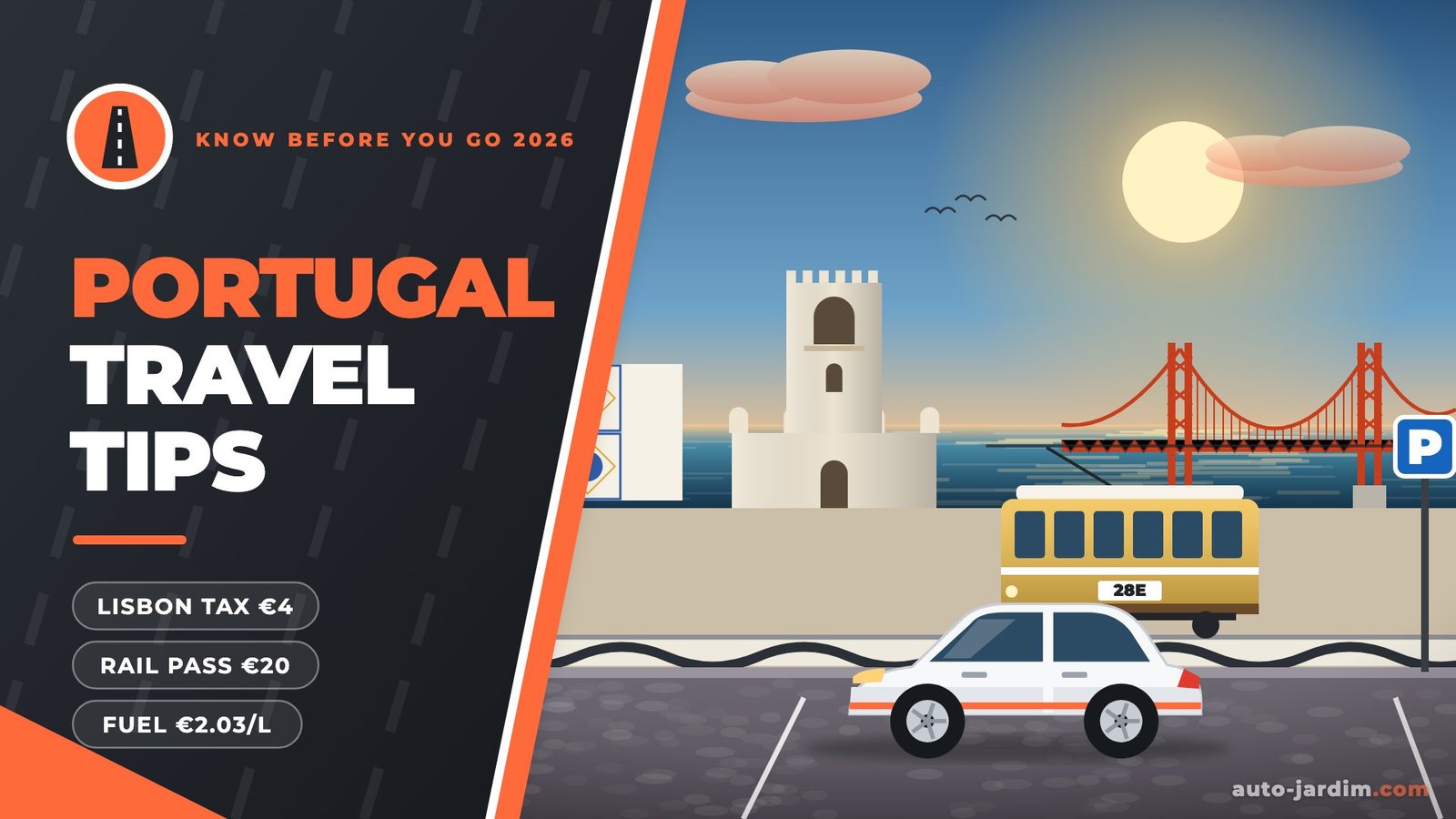
| Lisbon tourist tax | Per person per night, from age 13, maximum 7 nights | €4 |
| Porto tourist tax | Per person per night, maximum 7 nights | €3 |
| Madeira car rental levy | Per rental day, maximum 10 days (€1 for zero-emission cars) | €2 |
| CP Passe Ferroviário Verde | Regional, InterRegional, Lisbon/Porto urban trains and Intercidades (2nd class, seat reservation); not Alfa Pendular | €20 for 30 days |
| Motorway tolls (car) | A22 Algarve and other ex-SCUT roads free since 1 Jan 2025 | A1 Lisbon–Porto €25.05, A2 Lisbon–Algarve €23.80 |
| Fuel (national average, 28 Oct 2026) | Petrol 95 / diesel | €2.033 / €2.190 per litre |
| Speed limits | Town / open road / expressway / motorway | 50 / 90 / 100 / 120 km/h |
| Drink-driving limit | Drivers in their first 3 years: 0.2 g/l | 0.5 g/l |
| Emergency number | Police, ambulance, fire | 112 |
Tolls, fuel and tax figures are for a standard car and adult. Sources are listed at the end of the article.
EES. The EU Entry/Exit System started on 12 October 2025 and has been fully operational since 10 April 2026. If you are not an EU citizen and come for a short stay, you give your fingerprints and a facial image at the first Schengen border, together with your passport details. The system records each entry and exit and replaces the passport stamp. At Portuguese airports there are self-service kiosks, but allow extra time on your first trip.
ETIAS. The European Commission still lists ETIAS as not in operation, and no applications are accepted. The start date will be announced several months ahead, and the fee will be €20. Ignore websites that offer to “pre-register” you for a fee.
Most municipalities in Lisbon, Porto and the Algarve charge a tourist tax, collected by your accommodation. Lisbon charges €4 per person per night from age 13, for up to 7 nights. Porto charges €3 per person per night for up to 7 nights; the city council started a review in September 2026, but no new amount has been approved. On Madeira, car rentals have carried a regional levy of €2 per day (up to 10 days) since 1 June 2026.
Rail pass. The CP Passe Ferroviário Verde costs €20 for 30 days, €40 for 60 days or €60 for 90 days. Since late September 2026 it also covers the Lisbon and Porto urban trains (for example Lisbon to Sintra or Cascais). It is valid on Regional, InterRegional and Intercidades trains (2nd class, with a free seat reservation, up to two Intercidades trips a day), but not on the Alfa Pendular. It replaced the old €49 national pass.
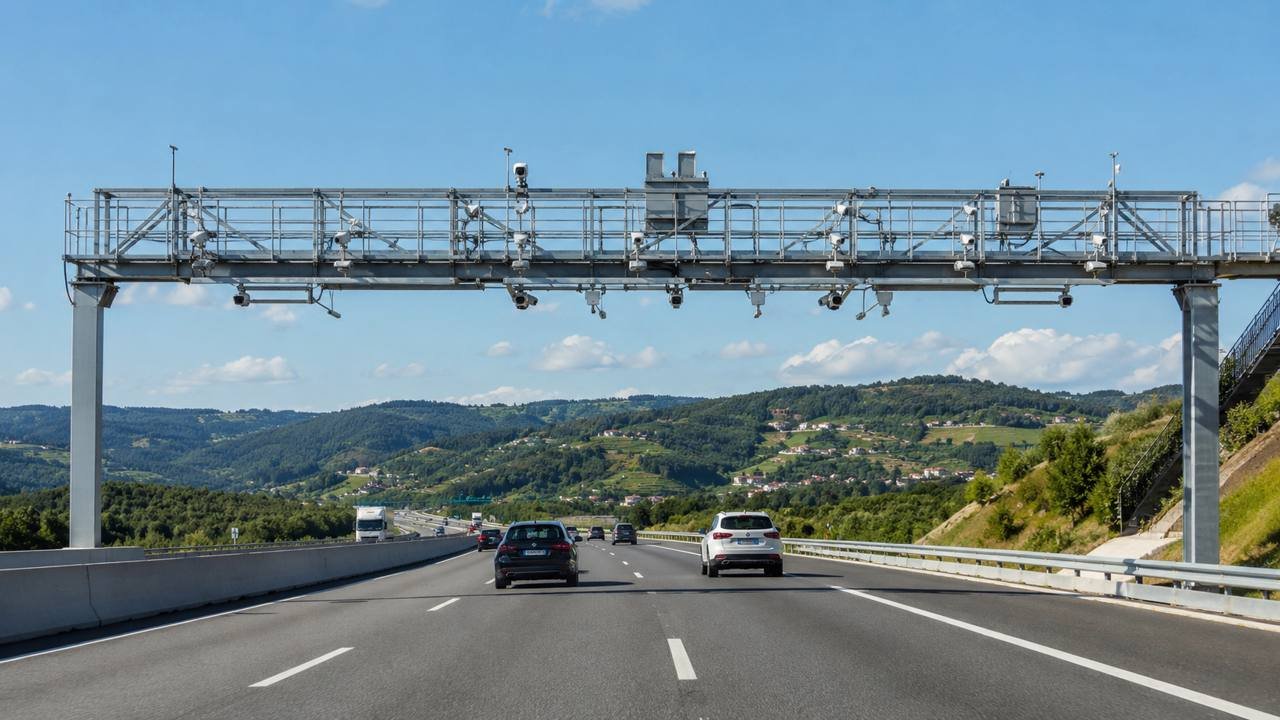
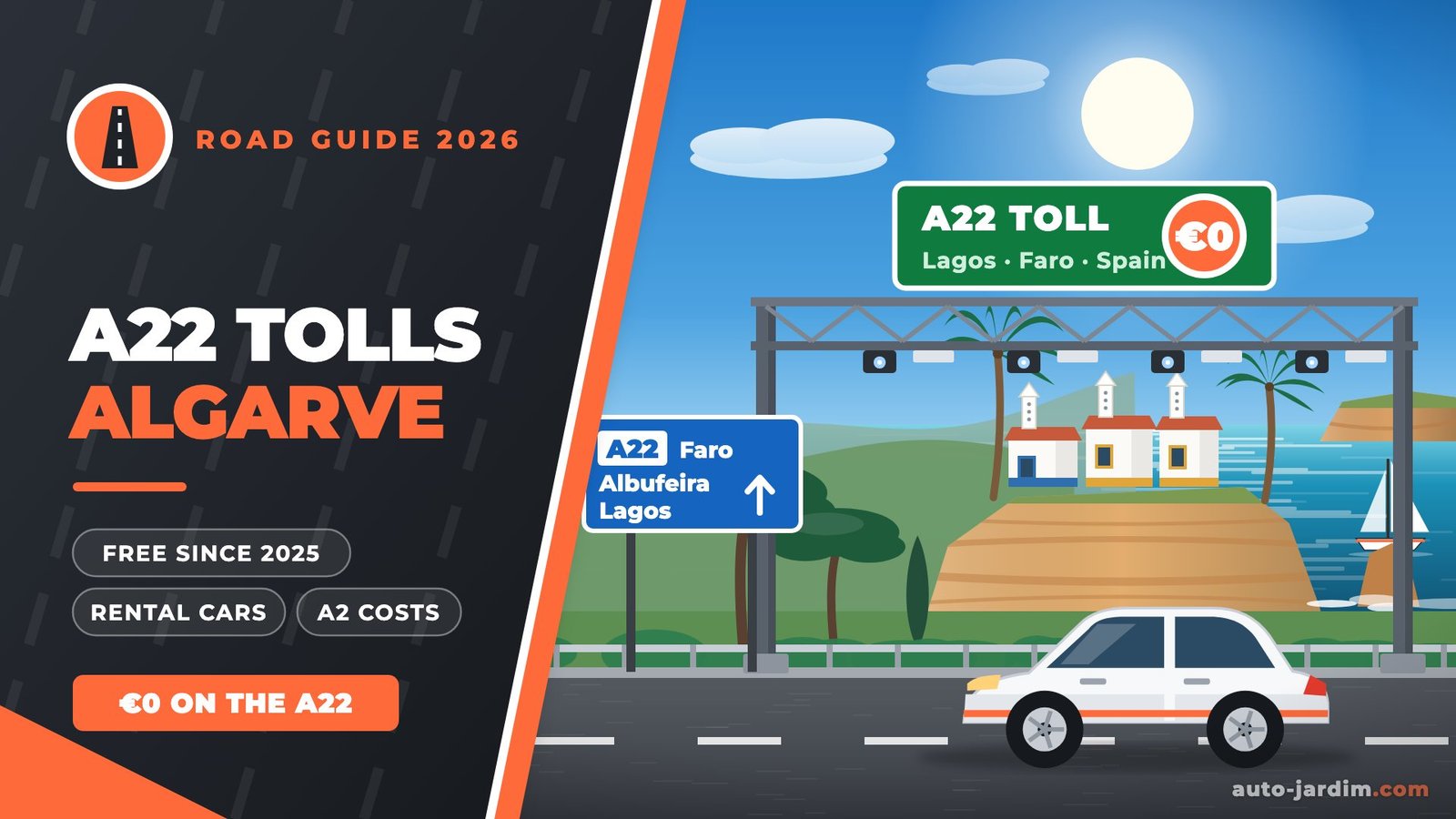
Tolls. The A22 across the Algarve and the other former SCUT motorways have been toll-free since 1 January 2025. The big toll roads remain: in 2026 a car pays €25.05 on the A1 from Lisbon to Porto and €23.80 on the A2 from Lisbon to the Algarve. Rental cars usually come with an electronic toll device; see our guide to tolls in Portugal and the toll calculator.
Fuel. On 28 October 2026 the national average price (DGEG) was €2.033 per litre for petrol 95 and €2.190 for diesel.
Driving rules. Speed limits are 50 km/h in towns, 90 km/h on open roads, 100 km/h on expressways and 120 km/h on motorways. The alcohol limit is 0.5 g/l, or 0.2 g/l for drivers in their first 3 years. Carry your licence and photo ID: a UK photocard licence is valid, and EU licences are accepted as they are. For city stays, read our parking guide for Portugal before you book a central hotel.
Planning to hire a car? Use the calculator to estimate the rental, cover and fuel for your route, then compare prices for your dates.
Portugal car hire and fuel budget
Fuel price prefilled with the DGEG national average for petrol 95 on 28 October 2026 (diesel: €2.190/l). Daily rate and cover are example values: replace them with the figures from your own quote. Tolls are not included.
| Place | Region | Drive from | Distance / time |
|---|---|---|---|
| Alcoutim | Algarve, on the Guadiana (Spanish border) | Faro | 93 km / about 1 h 15 min |
| Mértola | Alentejo (Beja district) | Faro | 118 km / about 1 h 35 min |
| Azenhas do Mar | Sintra coast | Lisbon / Sintra | 43 km / 40 min; 12 km / 20 min |
| Monchique | Western Algarve hills | Portimão | 26 km / 30 min |
A small whitewashed town on the Guadiana river, facing the Spanish village of Sanlúcar de Guadiana. Its medieval castle above the town houses a small archaeology museum. From Faro it is 93 km, about 1 h 15 min, and the last stretch along the river valley is the best part of the drive. One day is enough.
Known as a “vila museu” (museum town), Mértola in the Beja district spreads its museum across several sites in the old town, including a collection of Islamic art. The castle sits on the highest point, above the Guadiana. From Faro the drive is 118 km, about 1 h 35 min.
A cliff-top village on the Sintra coast, with white houses stepping down to a sea pool. It is 43 km from Lisbon (about 40 min) and 12 km from Sintra (about 20 min), so it combines well with a day in Sintra, where you will find Pena Palace and the Castle of the Moors. Parking in the village is very limited in summer.
A hill town in the western Algarve, about 26 km and 30 minutes north of Portimão. The road continues up to Fóia, at 902 m the highest point in the Algarve. Come for the views, the cool air in summer and the narrow streets of the old town.
No. On 30 October 2026 the European Commission still describes ETIAS as not in operation, and it does not collect applications. The start date will be announced several months in advance. Once it launches, the fee will be €20.
The Entry/Exit System registers non-EU short-stay visitors with fingerprints and a facial image at the Schengen external border. It started on 12 October 2025, has been fully operational since 10 April 2026 and replaces passport stamping. EU citizens are not affected.
Lisbon charges €4 per person per night (from age 13, up to 7 nights) and Porto €3 per person per night (up to 7 nights). The hotel or holiday let collects it, usually on arrival or at check-out.
Yes. The CP Passe Ferroviário Verde costs €20 for 30 days (€40 for 60, €60 for 90). It covers regional, InterRegional, Lisbon and Porto urban trains and Intercidades in 2nd class with a seat reservation (up to two Intercidades trips a day). Alfa Pendular trains are not included.
No. The A22 Via do Infante and the other former SCUT motorways have been toll-free since 1 January 2025. The main toll roads remain: a car pays €25.05 on the A1 Lisbon to Porto and €23.80 on the A2 Lisbon to the Algarve in 2026.
Dial 112 for police, ambulance and fire, including if you see a wildfire. Always carry photo ID: police can ask for it at any time and it is compulsory when driving.
See also on Auto Jardim
The best seasons for touring are spring (March to May) and September to October, when it is warm enough to explore without the summer crowds and prices.
Fact-checked on 30 October 2026 on the European Commission (EES and ETIAS pages), GOV.UK travel advice for Portugal, AIMA, CP (Passe Ferroviário Verde), Lisbon and Porto tourist-tax rules, Brisa toll tables for 2026, DGEG fuel prices and OSRM routing for drive times. Auto Jardim may earn a commission on bookings made through DiscoverCars links, at no extra cost to you.